
Building Chat to Community

My Role
I looked after the community features. I sat with key stakeholders regularly to match business goals with what users needed, and broke the bigger strategy down into milestones the team could actually deliver. I also guided the other UX designers working on sub-features, making sure each one was modular but could still fit into one platform.
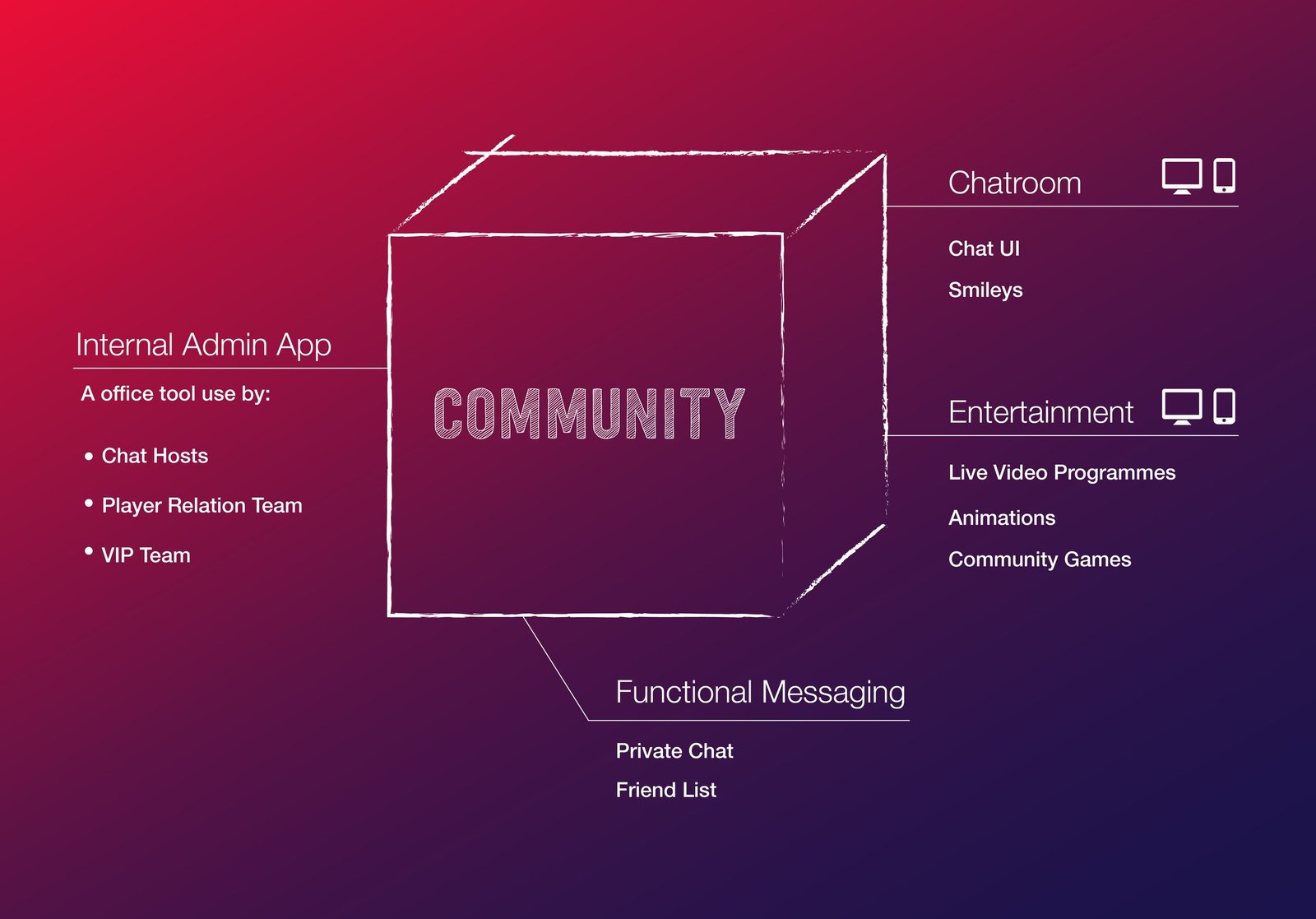
On our site, anything that helped players connect with each other counted as a community feature. Together, these features were one of the main things that set us apart from other sites. The diagram below shows roughly what community covered at the time.
A Team Without Direction
When I took on community from the UX side, the technical team was a bit lost. It was a small team of 2 technical leads, 8 developers and 2 QAs, and there was no product owner, so nobody was deciding what to build or when. Community wasn’t my only area, so I couldn’t take on all the project detail myself. I raised this with the Chief Product Owner, and after a while the request went through. We got a product owner.
The product owner and I started by listing the main pain points for users and the biggest bugs. Fixing those quickly improved the experience straight away and gave us time to work out a proper vision for the product. We wrote up the urgent issues and presented them to the board together, because we needed the business to agree. For the next quarter, we worked through those issues.
Putting Numbers on Something Intangible
At the same time, we wanted a set of KPIs so we could track our progress. This was hard, because we had no figures showing the value of the community features, and their effect on revenue was difficult to separate from everything else. We looked at a few options and chose sentiment measurement.
Sentiment analysis is widely used on social media, and it gave us a way to put a number on how players felt about our chat rooms. It wasn’t a perfect engagement metric, but the plan was to start tracking positive and negative attitudes towards the community and build up insight for future decisions.
Deciding What to Build First
With goals in place, we moved on to what to build. We organised a brainstorming day away from the office and invited all the stakeholders. Getting people out of their usual setting helped them relax and be more open to new ideas.
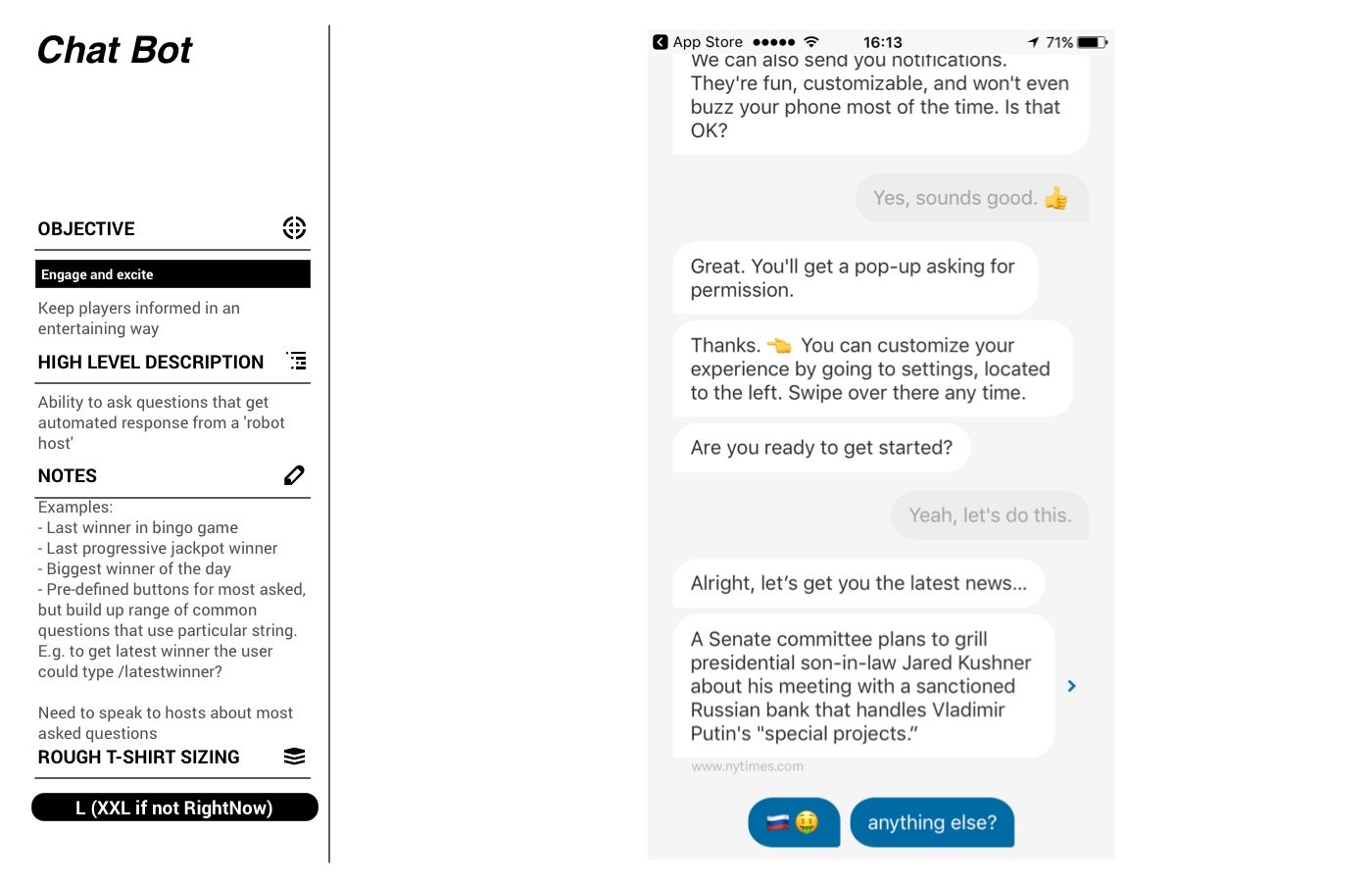
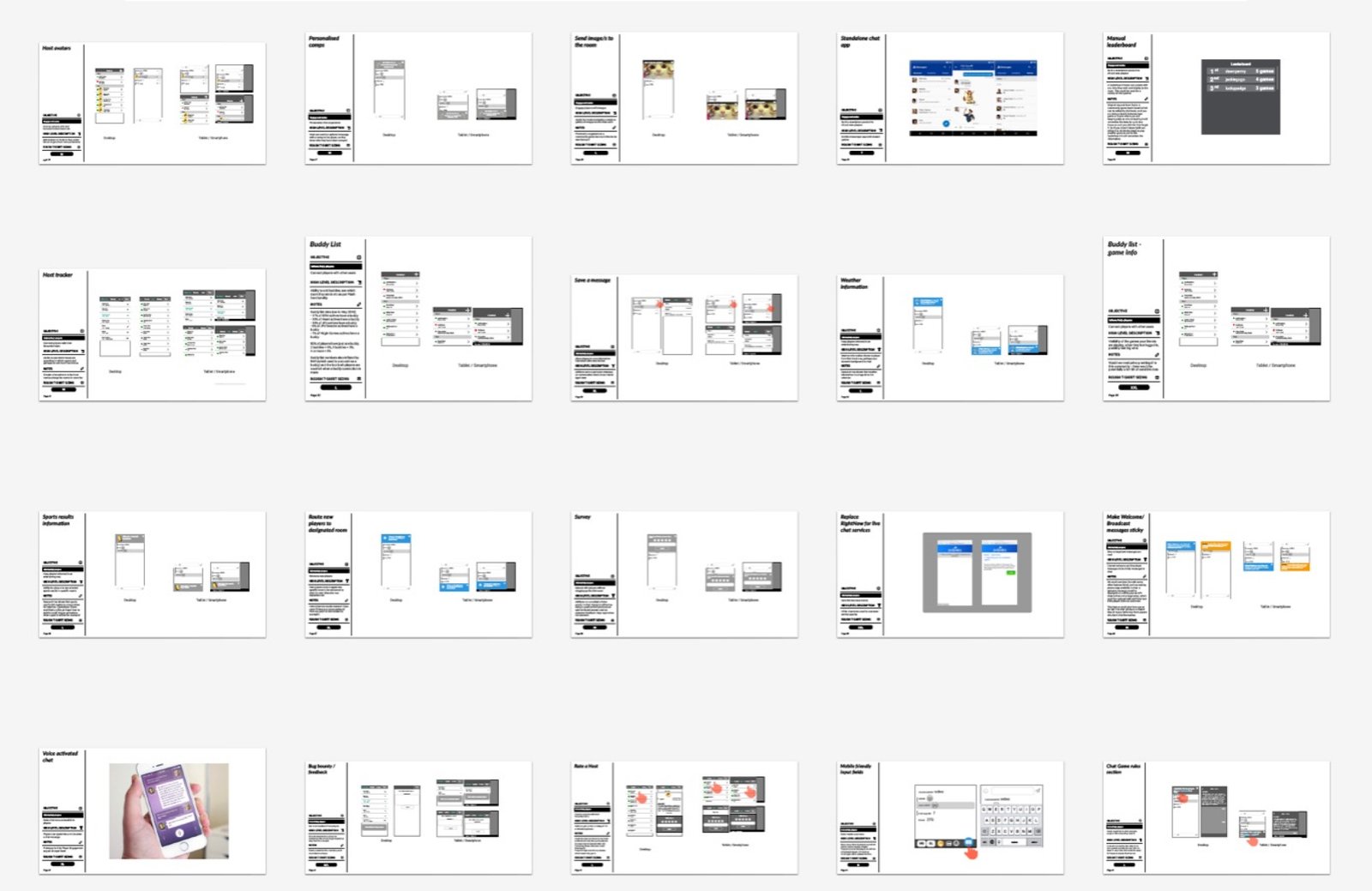
To prepare, I gathered every idea we already had from stakeholders and the backlog, 70 in total, and sketched each one as a rough wireframe. Seeing the ideas made them easier to picture, and having them printed meant every detail got discussed and the day stayed on track. At the end, everyone had three stickers to vote for what we should focus on over the next few quarters.
Sticker voting felt fair and quick, but afterwards I wasn’t sure the winning ideas were the best fit for our strategy. People tend to vote for what is easy to build rather than what matters most in the long run, and their own biases creep in. I’ve since learnt to ask people to explain their votes. Used that way, voting shows you why stakeholders care about something, but it shouldn’t make the decision on its own. The ideas still needed proper validation before we could predict their impact.
Moving Parts
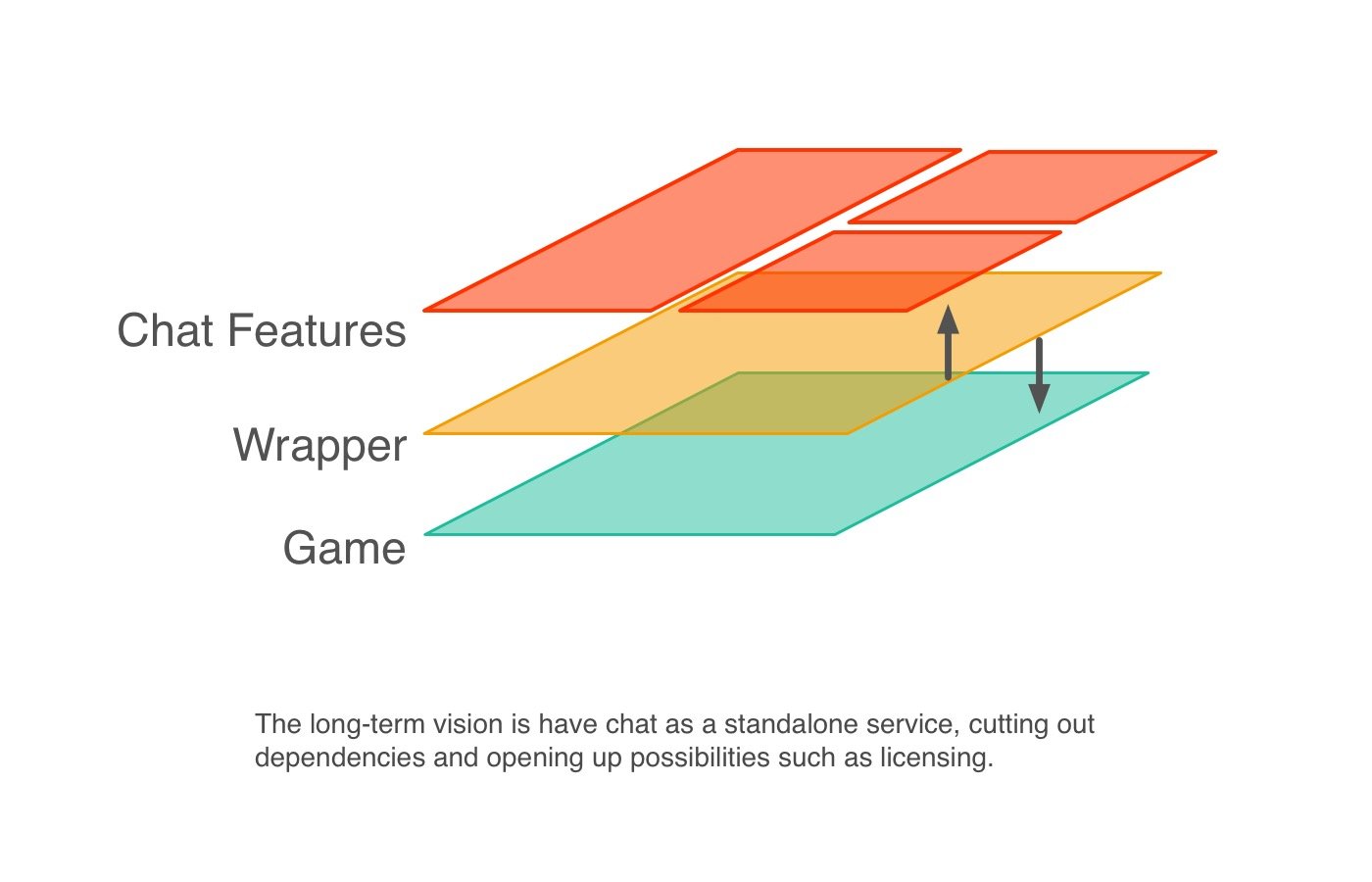
Community depended on a lot of other teams. Our video and chat games had to be loaded by the game studio or the wrapper team, so I needed a good understanding of how the technical layers fitted together. Above all, I had to keep talking to those teams, because there was little point building something they weren’t ready to load. Regular conversations, and sometimes a bit of persuasion, got features live sooner.
What I Learnt
It was great to have the chance to work with some board members on this project. I learnt a lot from them about business strategy, managing my time and getting things done in a large company. For UX in particular, these were my main lessons:
- Familiar tools like sticker voting and Gantt charts were often designed for different situations. Before using one, check that it actually helps.
- Choosing between a custom UI and a well-known pattern is always a tension. I learnt to put my designer ego aside and stop worrying about looking like a copycat. An established pattern is often the right choice, because it matches what users already expect.
- In a large company, communication between teams matters most. Simplifying complicated situations so everyone understands them makes the whole team faster.