
Senior Product Designer

Zero to ne,
One to More.

Portrait of Iris Luk

Hi, I’m Iris
I build fintech products for M&A markets, infrastructure deals and trade ideas for the buy side and sell side. Before that, I designed desktop and mobile games for clients including Virgin and Hasbro.

Experienced across different product stages.

Over twelve years, I’ve led projects at every point in the product cycle: zero-to-one ideas that need a validated concept, mature products ready to level up, and blue-sky thinking about long-term possibilities. Whatever the stage, I bring the right tools to move it forward, and the results to show for it.

Stage 1

Zero to One

Turn a blank page into a lean, testable prototype, so the team learns in weeks rather than quarters.

ExampleXtract (2021): I led the design of a new LLM tool that helps lawyers read loan documentation. Working with the data science team, I turned its AI capabilities into high-fidelity prototypes and tested them with real lawyers, cutting the time to produce a covenant data sheet from 24–48 hours to a few hours.
Outcome: A testable concept, and the evidence to fund it

Stage 2

Establish Distinctive Position

Find the white space competitors have missed and turn it into a position the whole team can design to.

ExampleAt Gamesys, I co-invented a patented bingo mechanic that reveals the next four balls. It changed the game dynamic from rewarding one winner to keeping every player engaged until the last call, and became a mechanic we white-labelled across brands such as Hasbro’s Monopoly and Heart Bingo.

Outcome: A clear, defensible point of difference

Stage 3

Level Up Existing Product

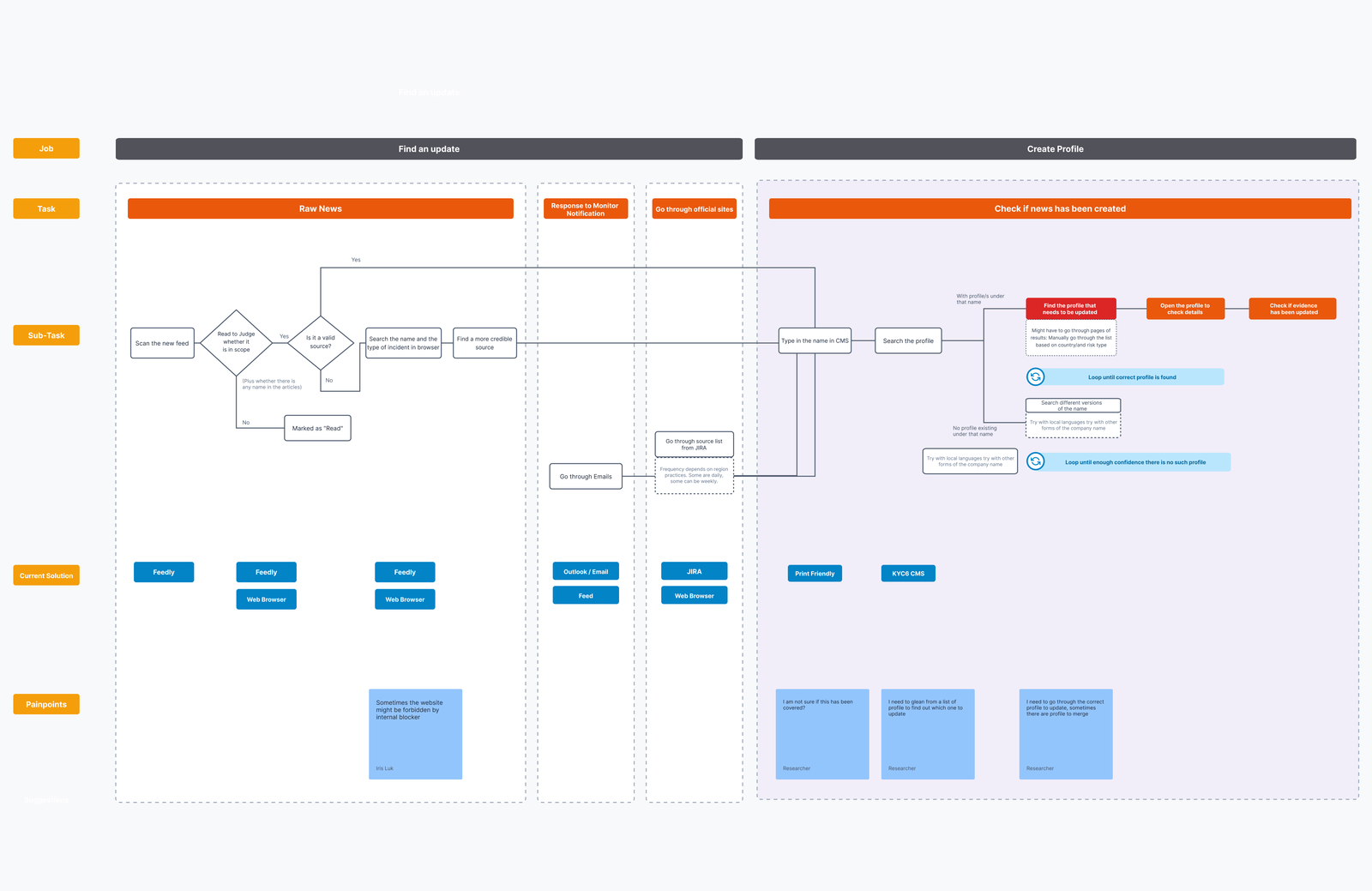
Use data, support logs and interviews to find costly friction, then fix it in order of impact.

ExampleAt KYC6, one display change to the research CMS removed a duplicate check, saving an estimated 400+ research hours a day.

Outcome: Prioritised improvements with measurable return

Stage 4

Explore Long-Term Possibilities

Map possible futures into a shared north star the roadmap can balance against near-term delivery.

ExampleAt Mergermarket, a five-year plan to grow from 130k to 500k users, built around guided discovery and AI-generated insights.

Outcome: A north-star vision the roadmap can follow

Stage 5

Simplify or Retire Legacy Products

Map who uses what and the revenue behind it, then simplify or retire in steps clients can follow.

ExampleAt Infralogic, I led the move from the legacy platform to a new version built around a dashboard and competitive leaderboard that surface what lenders, fund managers and advisers need. It turned 16k occasional users into active ones and gave account managers stronger footing at renewal.
Outcome: A leaner product, with clients and revenue intact

Untangle.
Simplify.
Ship.

I turn dense data, regulation and messy workflows into products that bankers, lawyers and analysts can use without a manual.

From conversations to strategy.

I use a range of facilitation tools to bring teams and stakeholders into the same conversation, shaping strategies that create real impact and fit the product's current stage. Here are some examples from my toolbox.

Images have been recreated to avoid disclosing sensitive information protected by a non-disclosure agreement.

Shift Left Lenses

The challenge: a legacy KYC product that needed to cost less, with no clear view of where to improve it.

I ran one-to-one deep-dive interviews with every research team lead across Asia, the Middle East, the Americas and Europe, plus the Head of Research and customer service, mapping the end-to-end CMS workflow through a shift-left lens.

This exposed where work was being repeated and why, leading to a prioritised feature list for the proof of concept and pilot, targeting a bottleneck that could save 400+ research hours a day globally.

Cost Saving CMS Problem Spotting
KYC workflow

Deciding What to Build Next

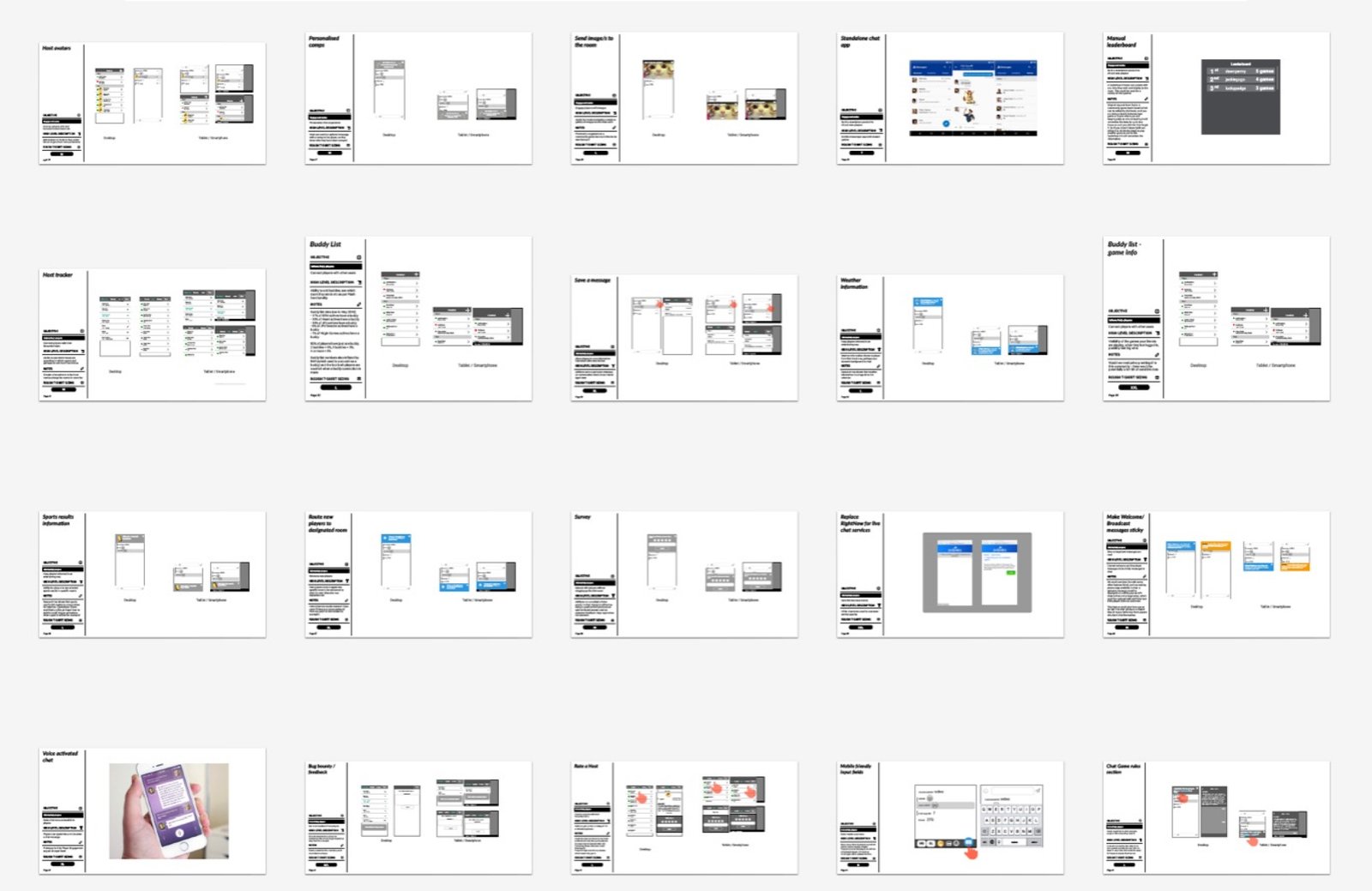
I regularly run “what to build next” workshops with department heads to prioritise new features and backlog items.

The quality of the conversation depends on the preparation. Beforehand, designers use usage data to size the impact of each backlog item, and work with engineering to estimate the technical effort of new features.

With impact and effort on the table, the discussion moves from opinion to evidence, and decisions are made faster and stick.

Clarity Conversation Facilitation Plan Making
70 feature ideas printed as rough wireframes for a prioritisation workshop

One System, Many Products

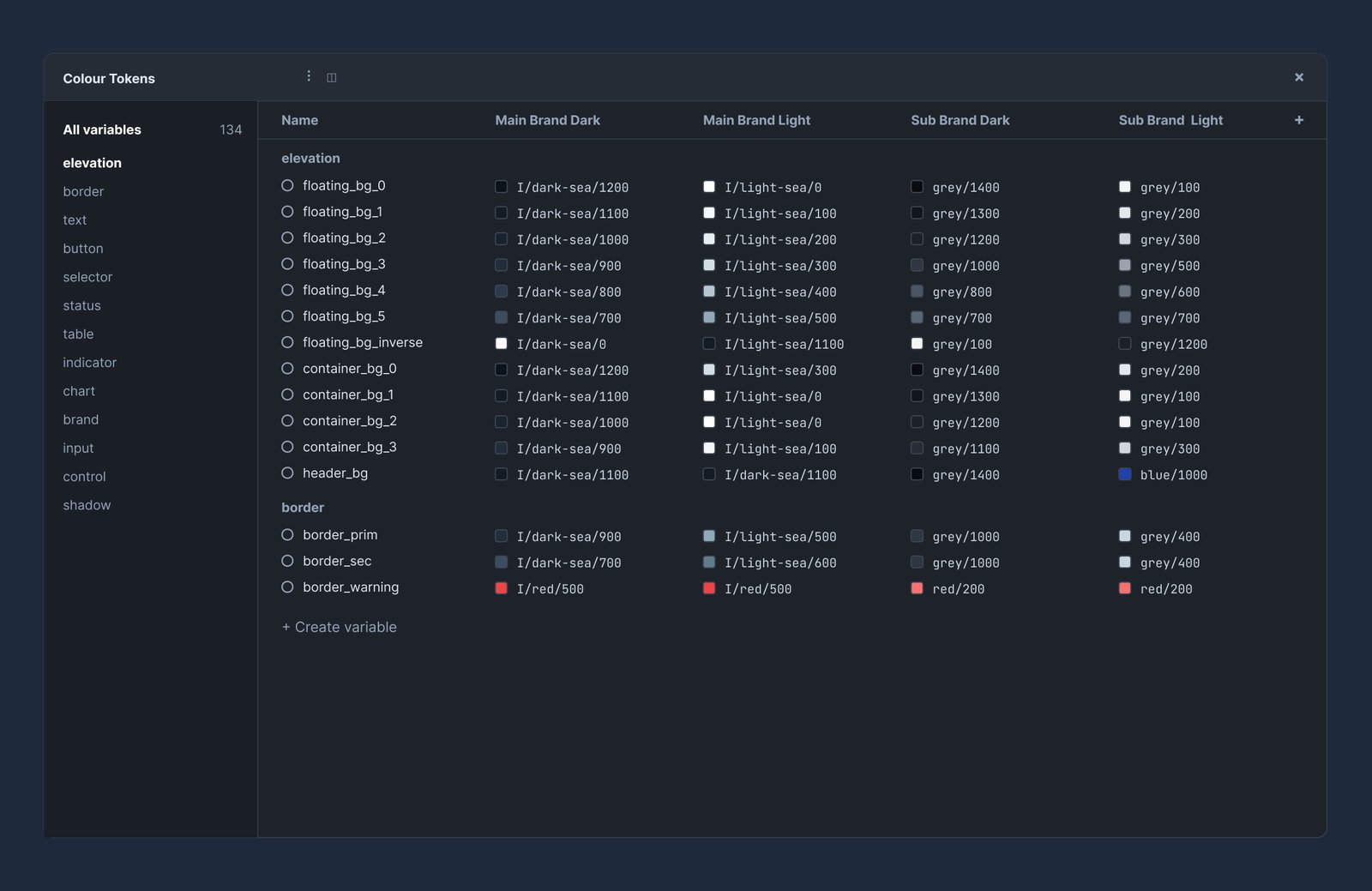
I often lead design systems that sit as an umbrella over several products. The hardest part isn’t the design; it’s the conversations.

I bring product teams together to agree which use cases the system should serve first and what each product genuinely needs from it, so the system grows where it adds the most value.

In the AI age, designers can increasingly build the front end themselves. That makes shared standards and clear principles more essential than ever: they keep the product consistent, whoever builds it.

Design System White-Label Product Shared Components Finding Common Ground
Colour tokens in a multi-brand design system, with light and dark values for each brand

Every Piece of Feedback Counts

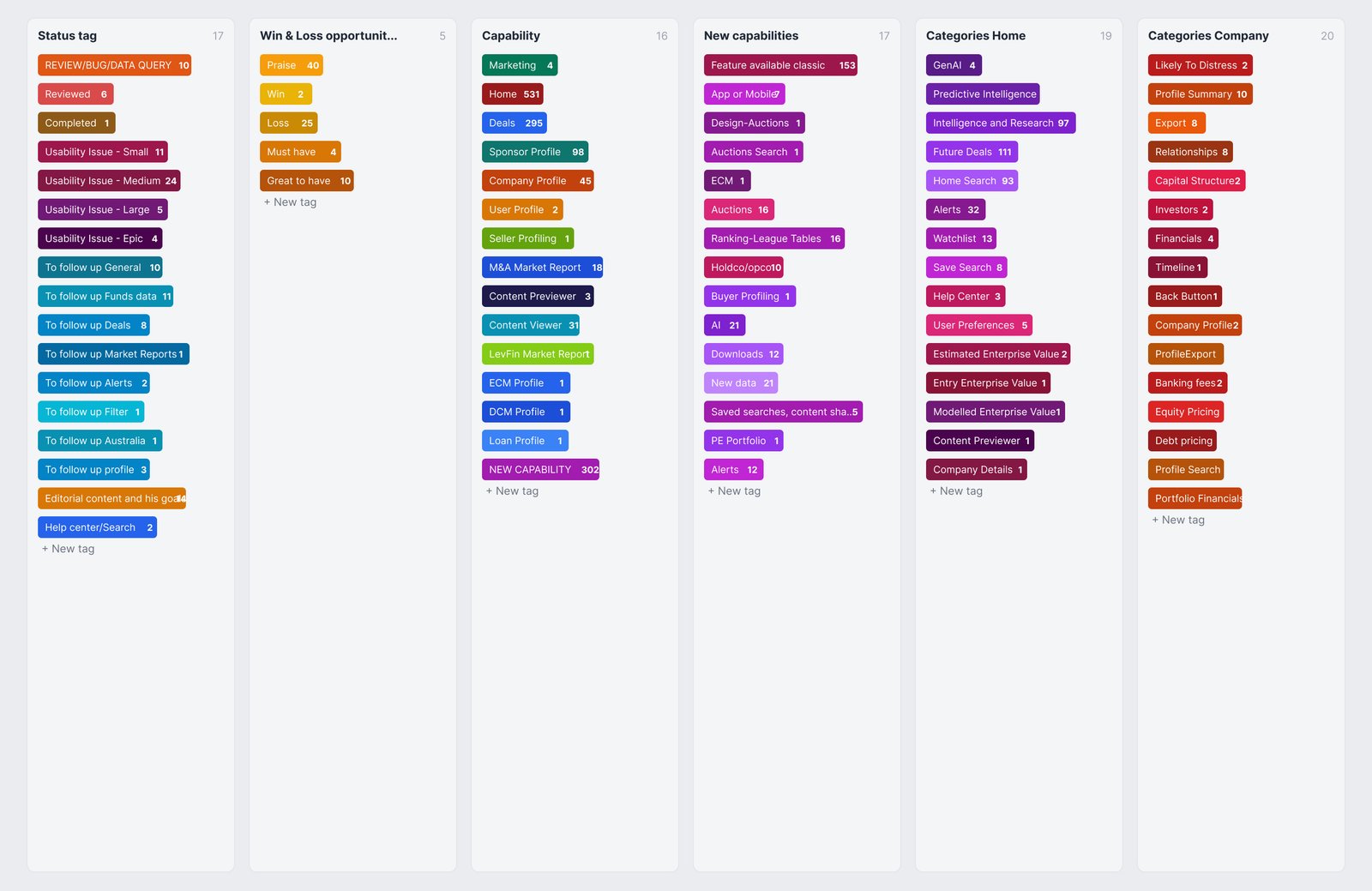
In a mature product, feedback arrives from everywhere and every team reads it differently. Sales hears deal blockers, support hears frustration, product hears feature requests, and strategy stalls in the gaps between them.

I built a research hub with a shared tagging system so every team looks at the same evidence in the same language. Instead of debating anecdotes, customer service, sales and product can see patterns together and agree on what matters most.

The hub now anchors roadmap conversations across departments: priorities are traced back to real customer needs, and every piece of feedback is considered and answered.

Multidisciplinary Teams User Research Knowledge Base
Research repository in Dovetail: customer feedback organised by colour-coded tags for status, capability and product area

Toolbox for building
creative and trusted teams.

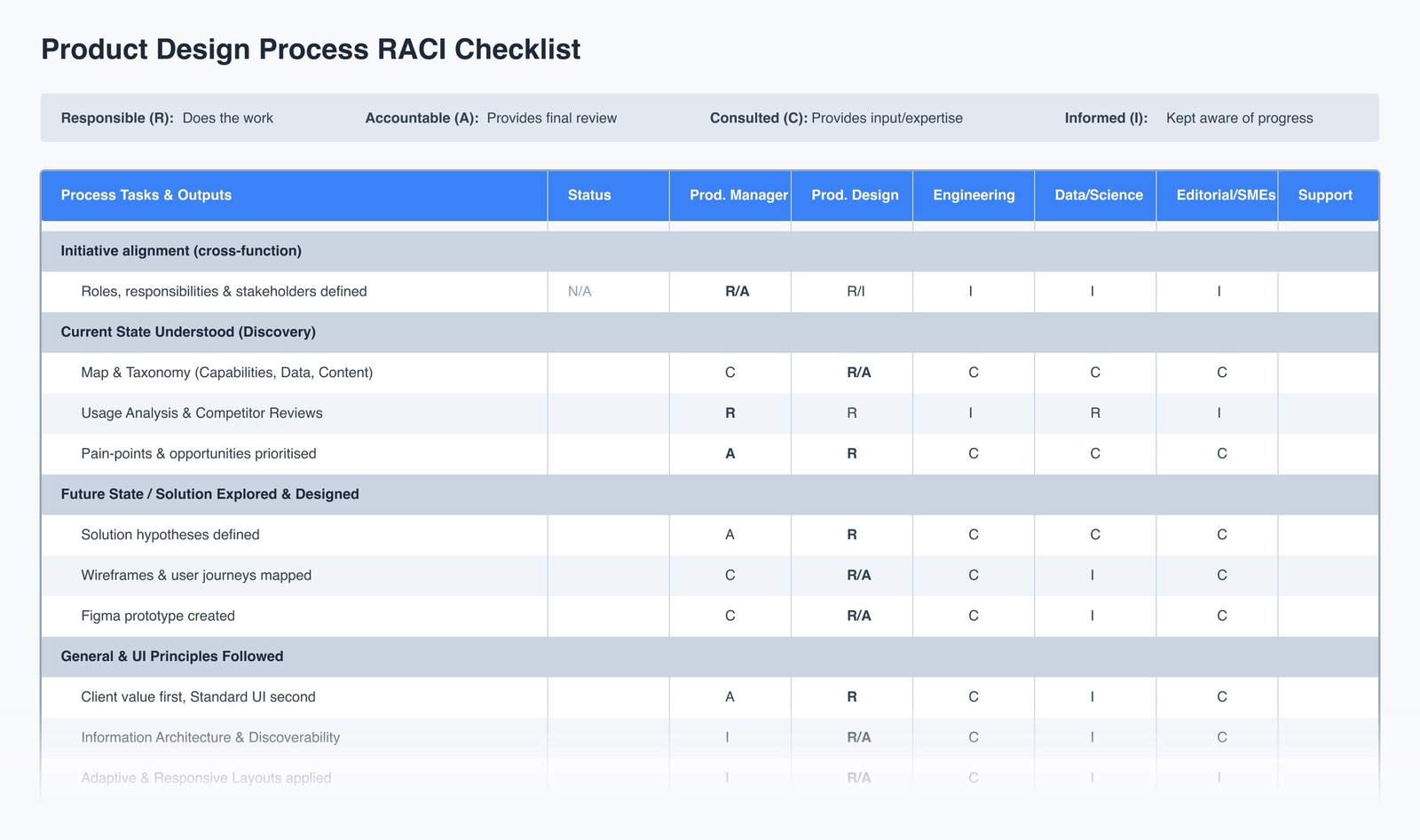
Product Design Process RACI checklist

Everyone Aligned Before Kick-off

Before a project starts, I set up a clear process for multidisciplinary work: who decides, who contributes and who needs to be kept informed. Everyone knows what to expect from day one, so collaboration runs smoothly and without friction, and it has built lasting trust with heads of department across the business.

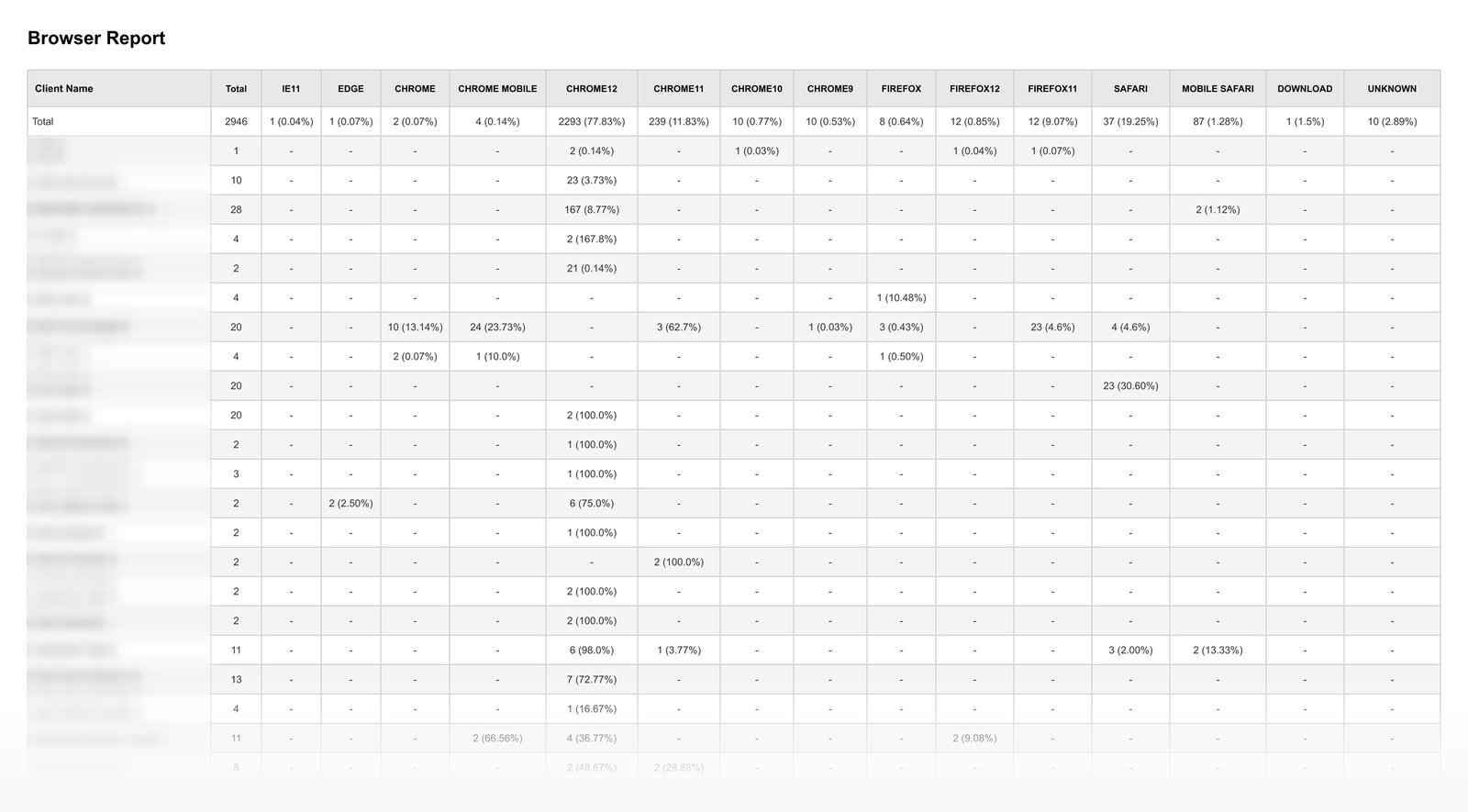
Browser usage report, with client names hidden

The Devil Is in the Details

Quality lives in the details, and I hold every release to that standard. One example: instead of designing for an imagined device, we base breakpoints and layouts on the screens and browsers our users actually use, and an in-product report keeps that data current as their habits change.

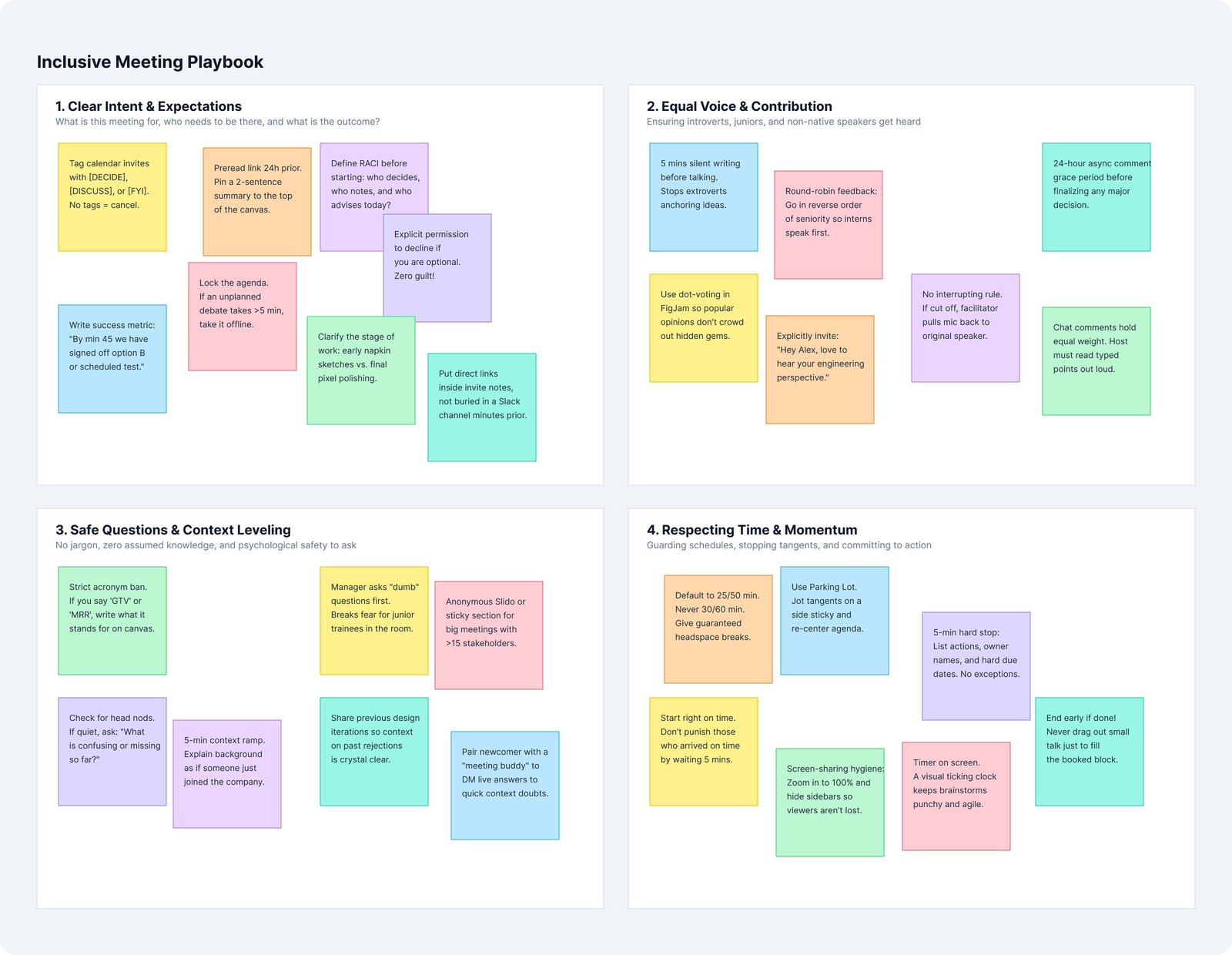
Inclusive Meeting Playbook: sticky notes grouped under clear intent, equal voice, safe questions and respecting time

Safe to Speak, Free to Create

Creativity only thrives when people feel safe to speak up. I initiated open discussions with my design team to agree the culture principles we wanted to work by, then turned them into an Inclusive Meeting Playbook: practical rituals that make sure every voice is heard, from the newest junior to the most senior stakeholder.

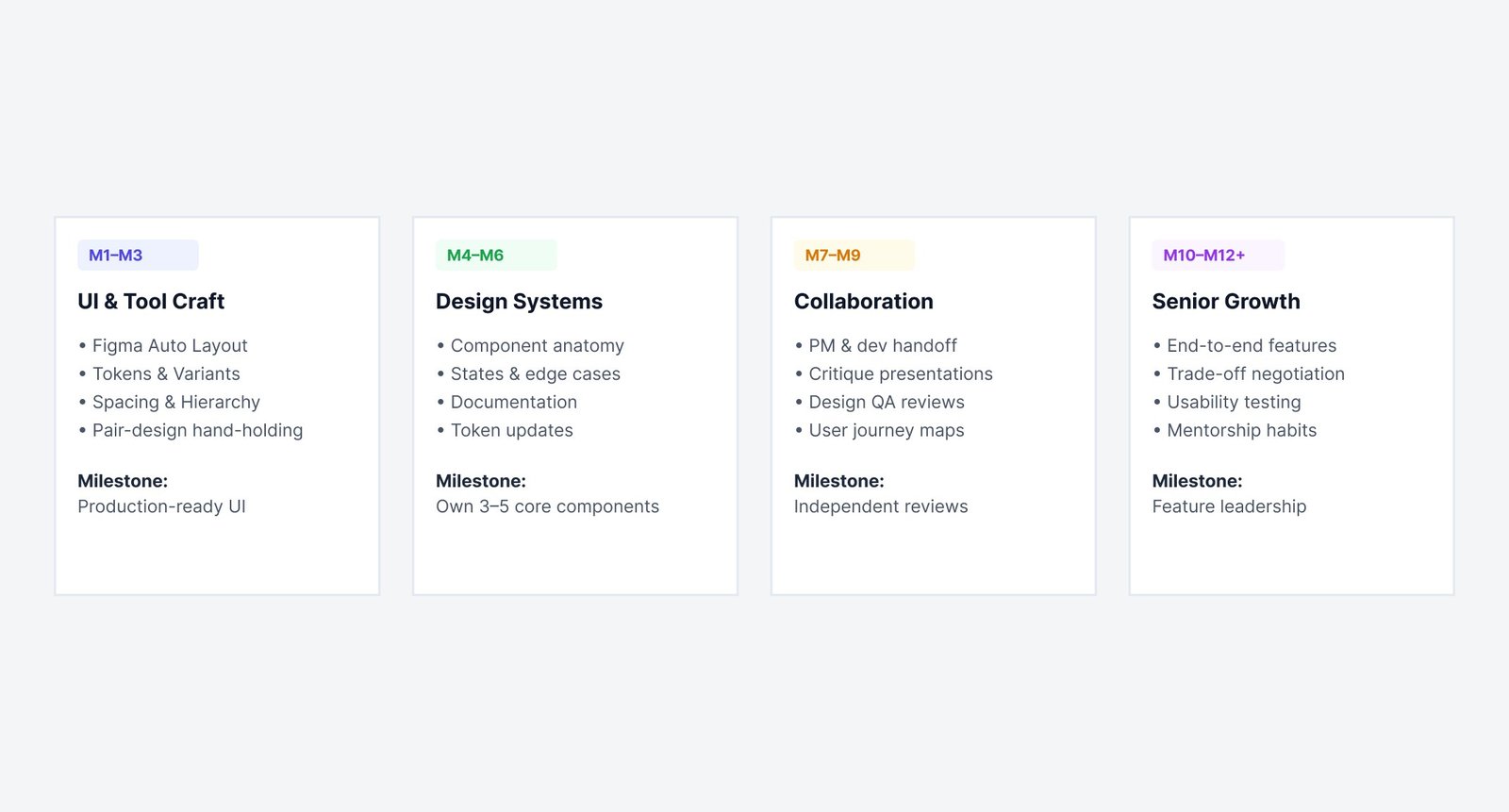
Growth plan in four stages: UI and tool craft, design systems, collaboration and senior growth, each with a clear milestone

A Clear Path to Growth

I’ve mentored junior designers, including people with no design background, using a structured growth plan. We sit down together to set a vision for their career, then work through clear stages, from tool craft to feature leadership, each with a milestone we both agree on, so progress is visible rather than left to chance.

  • 01Align Across Teams
  • 02Uphold Design Quality
  • 03Build Psychological Safety
  • 04Unlock Team Member Potential

Case Studies of selected works.

Redesigning search in Mergermarket, a revenue-critical M&A intelligence platform: condensing a full page of filters into one omnibox that understands companies, roles and intent.

Turning Virgin Games chat into a community product: securing a product owner for a team with no direction, setting sentiment-based KPIs, and running a 70-idea workshop to decide what to build first.

Selected List

Clients

  • DBS Bank
  • Credit Suisse
  • Sony
  • Virgin Games
  • Heart Bingo
  • Dulux